Thursday, December 18, 2014

Support Great History and Fire Safety Education

Support Great History & Fire Safety Education for Children!!!


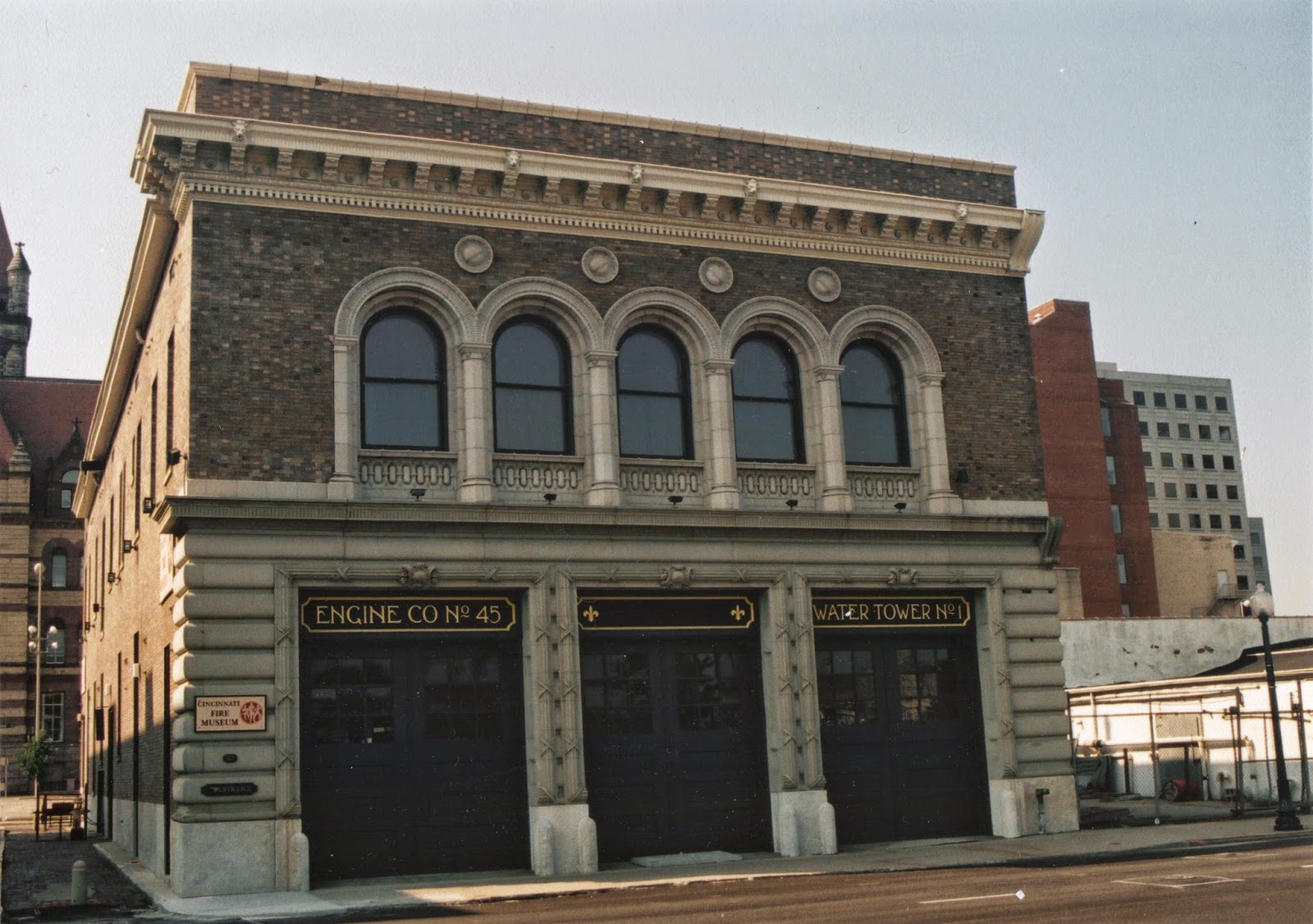
Fire companies in service at Engine Co.45s
quarters - This firehouse is now home to the Cincinnati Fire Museum


     Greetings Greater Cincinnati Firefighters, fire buffs, and history lovers alike!  One of the primary sources for the material I use to conduct my research is the Cincinnati Fire Museum and its archive.  The museum has been in the business of preserving the history of the the fire service in the Cincinnati region for decades now.  More importantly the fire museum has reached thousands of children with its vital message of fire safety.  If you love this history please consider taking the time to support the museum in one of several ways....one of which it totally FREE.


The Cincinnati Fire Museum
Former Home of Engine Co.45


How can you support the mission of the Cincinnati Fire Museum:

#1 - Totally FREE - Sign up for Kroger Community Rewards:

Go to www.krogercommunityrewards.com and click Create An Account. Follow
the prompts to register a new account. You are asked to enter an email address
and to create a password.

Once registered, go to www.krogercommunityrewards.com, sign in, and click
Enroll Now.

When the "Find Your Organization Screen" go to Cincinnati Fire Museum with and organization number 80344 and click
ENROLL. 

It only takes a couple of minutes and it is a totally FREE way to support the 
Fire Museum


#2 - Join the Museum!!!

Follow the like to establish membership in this great organization:


#3 - Donate to the Museum

To make a simple donation to the museum click on the link below:


Members of Engine Co.45 & Water Tower Co.01


Thursday, December 4, 2014

Superstition or Premonition - A Dream of Death Becomes Reality

A Premonition of the Death of Henry Miller

     On February 1st 1904 the phone rang at Engine 29s quarters.  Substitute firefighter Moller was calling from the Winton Place firehouse.  He was concerned about a dream he'd had overnight and wanted to pass along a message to Pipeman Henry Miller.  Moller told Miller that he had seen him killed in his dream along with Captain Davies.  Moller was clearly concerned that his dream was more than just a tired delusion, he was fearful it might be a premonition of a disaster soon to take place.  The day passed without such a disaster.

     It was that night that an alarm from Box 46 called firefighters to the scene of a blaze at the Henry Nurre Picture Frame Manufacturing Factory at 1409 Plum Street.  A 10 Blow was quickly put in and soon most of the department was rushing to the scene.  Engine 29 was tearing toward the blaze with Miller and Davis on board.  As they sped to the fire the men joked about the dream Moller had warned them about earlier that day.

     Upon arrival the men found a 5 story brick factory situated along the canal.  Fire had been at work on the structure long enough to bring the roof down.  The tall masonry walls stood without bracing as the fire continued to rage within.  Engine 29 arrived on scene and the company took up a position on the south side of the factory.  Captain Davis, Lieutenant Bickel and Henry Miller were operating a stream from a "Y" shaped ledge of ground near a 15' hole at the foot of the factory.  It was extremely cold and the men were quickly suffering the effects of the spray of icy water from their hose.  Other lines were being operated from Plum Street.  Water access had been made easy by virtue of the proximity of the building to the canal.  Once holes were punched in the ice the water was easily drafted into the engines to supply the hose.

     Suddenly the warning of "collapse" was shouted across the fire ground.  Patrolman Shaeffer recognized the precarious position of the crew of Engine 29 and he yelled to them to run.  The men held fast.  They did not want to drop their hose without first having it shut down but they were undermanned.  A recent department directive required a man be taken from the companies and placed on watch in theaters during shows.   With only 3 men they did not have a fourth to send to the engineer to shut the line down.  The men called to a bystander to deliver the message but it was too late.  Shaeffer watched as the bricks crashed down around the men.  Once the shower of debris stopped men rushed in to find the crew.  Lieutenant Bickel was found along the gutter of the building.  Captain Davis and Henry Miller had been tossed into the hole under the ledge they had been working from.  The men were quickly pulled from the hole and delivered to the hospital.


Headline - 2/2/1904
Cincinnati Enquirer


     Fire, building collapse, ice, and cold were not the only hazards braved by the responders on scene at the Nurre Blaze.  In an effort to make the scene more secure an electrician with the power company moved to cut the power lines to the building.  A mass of lines fell to the street near patrolman Hubner.  The officer was shocked and tossed into the canal unconscious.  Fortunately for Hubner the ice held and he was dragged from the ice.  He was lucky to survive the incident.

     Captain James Conway and the Salvage Corps also had a close call.  They had been working in a 3 story tenement across the alley.  They were helping panicked residents to remove and protect their belongings when the call of collapse was heard.  The men rushed to exit the structure but stopped before stepping into the street just in time to avoid the shower of rubble from above.


Headline - 2/3/1904
Cincinnati Enquirer


     Things had developed quickly on the fire ground.  The collapse that caught Engine 29 occurred in the first 30 minutes of operating time at the scene.  Miller and Davis had been carried to the hospital.  Their families were notified as quickly as possible of the situation.  Mary Miller, Henry's wife, received word of the collapse and she frightfully rushed to the hospital.  As she arrived Henry died of his injuries.  He had sustained a skull fracture and had been crushed by the falling debris.  He died at 12:25am on February 2nd.

     Miller was 40 years old and in addition to his wife he left behind a 3 year old daughter.  The family resided at 1079 West Liberty Street.  A substitute detail was assigned to Engine 29s quarters so the regular members could participate in the funeral a couple of days later.  The men were decorating the hose wagon that would carry Millers body from his home to the services when smoke was seen coming from a residence at 1071 West Liberty.  The firemen prepared for the funeral procession were at the ready and they broke from their positions to extinguish what was found to be a burning box of waste.  The subs from Engine 29 arrived and took over.  Soon the procession was making its way past the Gifts house.  A bell from the Gifts tolled a final time in honor of Miller as he was carried to the German Protestant Cemetery on Vine Street.


University of Cincinnati Rare Books

   
     Superstitions of one kind or another are not uncommon among firefighters.  Indeed many people occasionally put stock in superstitious beliefs.  People sometimes experience dreams that seem to carry some meaning in our conscious lives.  Such was the reason for the concerns of Moller.  Perhaps is was simple coincidence that he called to tell Miller of his dream just hours before Miller was killed.  Fortunately for Captain Davis the premonition was only partly accurate.

     This tragic story of superstition, premonition, death, and sacrifice had been lost to history.  The following will be added to the Roll of Honor in recognition of the heavy price paid by Miller and his family in service to the CFD and the City of Cincinnati:

Henry G. Miller
Pipeman - Engine Co.29
Died 02 February 1904
Crushed in wall collapse at fire scene 


Henry G. Miller Headstone
Vine Street Hill Cemetery (German Protestant Cemetery)


Sunday, November 30, 2014

The Tragic Story of William and Patrick Haley

The Tragic Story of William & Patrick Haley

     William and Patrick Haley lived at 950 Martin Street with their 63 year old mother and another brother James in 1900.  Their mother Margaret was a widow as was Patrick.  The first tragedy the family would experience unfolded in this year.  William was just down the street from his home at Kruse's Saloon when he got into an argument about politics with his friend Tim Reardon.  Haley was very vocal and attracted the attention of a number of other patrons.  As things became tense the men were directed to leave the saloon and they complied.  Reardon walked away as he wanted to avoid a confrontation but the other men were more inclined to continue the dispute.  A fight quickly ensued.  Haley was outnumbered and did what he could to defend himself.  He was knocked to the ground and the men began to kick him.  The noise from this fight roused the men of Engine Co.6 who came running to the scene.  The crowd backed off and Haley rose to his feet.  Not having had enough, Haley continued to boast that he could take any man among the crowd.  Harry White came forward and they went to the ground.  Haley was getting the best of Harry when Edwin White, Harry's brother, pushed forward and kicked Haley solidly in the head.  Firemen broke the crowd up and dragged Haley back to their quarters.  The crowd followed and soon it was clear the men were going to rush the firehouse.  Firemen grabbed nearby tools to arm themselves.  As the crowd surged into the firehouse someone yelled "cops" and the men scattered.  Two officers arrived and Haley requested they escort him home.  He complained of being injured.  While on their way to his home, Harry White appeared and claimed Haley had cut him.  Officers decided to arrest both men and they were taken to the Hammond Street Station.  White posted bond and was released by Haley did not make bond and was told he would spend the night in jail.  Around 4:30 in the morning on the 24th of September Haley was found dead in his cell by the turnkey.  The White Brothers were later arrested and charged with murder.


University of Cincinnati - Birth and Death Records


     Tragedy would strike the Haley family again about a decade later.  In May 1909 Engine Co.6 relocated to its new quarters at Pearl and Martin Streets.  On July 16th Ladder Co.15 was organized from the same quarters.  It had been a year of growth for the fire department.  91 substitute firemen had been made regular firefighters during the year to accommodate a new schedule for firemen that gave them each every fifth day off.  The city had also been modernizing and their was a growing use of a new utility, natural gas.  On December 22, 1909, the department was stretched thin and the chief was forced to call on "outside subs" to fill the roster.  An outside substitute was not on the list of regular subs and had never had to submit to any physical or oral test.  They were used as a last resort on the schedule and were paid $2 per day for their service when on duty.

     Patrick Haley was called in to work on this occasion.  Unfortunately that is when a terrible accident struck the quarters of Engine Co.6.  The men must have smelled gas and Captain Newman and Patrick Haley went to the basement of the fire company quarters to check things out.  Something sparked an explosion.  Haley and Newman were rushed to Good Samaritan Hospital.  Haley had been badly burned and was given pain medication to help calm him.  On Christmas Day, several days after his arrival at Good Sam, Haley died of his injuries.  Captain Newman was expected to recover.  By this time Haley had remarried and resided at 996 E.3rd Street. 


Cincinnati Enquirer 26 December 1909


     Unfortunately for the Haley family, because of his status as an outside substitute, Haley did not qualify for a widows pension.  This loophole prevented his death from being recognized as a Line of Duty Death and his name has never been mentioned among the honored men lost in service to the department and the city.  Chief Archibald must have recognized this family had suffered and not gained compensation from the city.  Just a few days later on January 01, 1910 he appointed Thomas Patrick Haley a substitute at the same firehouse where his relative Patrick Haley was caught in the explosion of gas that cost him his life.  Though this appointment indicates Chief Archibald was sensitive to the loss suffered by the Haley Family, the chief makes no mention of Haley's death in his annual report for the year.  Indeed he reports, "I am pleased to state that no fatal accidents occurred during the past year."  The closest anyone comes to noting the death was the Fire and Police Department Surgeon Thomas C. Minor M.D., who in his annual report noted "within the past few months the so called natural gas introduced in this city has caused innumerable accidents to firemen many of whom have been blown up, even in engine houses and at fire cisterns, by this insidious and dangerous explosive introduced under the plea of public economy."  Though Haley is not mentioned by name it seems unlikely that Minor was not thinking of him when he wrote this in his report to city leaders. 

Cincinnati Enquirer - 28 December 1909


     Patrick Haley would ultimately be lost to history and his family never did receive the pension that would otherwise have provided some benefit to any other regular substitute or firemen in service of the city.  Haley likely acted in the role of outside substitute for a long time as the 1900 census listed both he and his brother William as firemen.  Patrick Haley's death certificate also listed his occupation as fireman.  Though he was not honored or mentioned by the department it seems appropriate to place his name among those who made the ultimate sacrifice in service to the department and the city.

     As a side note, natural gas would continue to be a problem in the city for some time to come.  Less than a year after Haley was killed in the basement of Engine Co.6, The quarters of Engine Co.11 would be the site of still another gas explosion.  On November 23, 1910 the quarters of Engine Co.11 at Eastern and Vance was rocked by an explosion that forced the house to be abandoned immediately.  Ironically the chief decided to locate Engine 11 at Engine 06s quarters until a new house could be built for the company.

Engine Co.6 - Pearl and Martin Street - Adams Landing
Courtesy Cincinnati Fire Museum


     The Haley Family experienced a number of tragic episodes including the loss of Patrick to the blast at Engine Co.6s quarters.  Patrick Haley will be added to the names of the men honored after having lost their lives in service to the department.  CFD Roll of Honor:

Patrick Haley
Outside Substitute - Engine Co.06
Died 25 December 1909
Injuries resulting from gas explosion in the basement of Engine 06 quarters


     Special thanks to Columbus Firefighter and Historian Chris Klein for providing much of the information used in the re-discovery of this incident.


Wednesday, November 5, 2014

Herman Krieger - LODD Update

Herman Krieger - LODD Update

     Herman Krieger - Assistant Engineer of Fire Co. 48 collapsed and died while operating the pump at the scene of a shed fire in the 6800 block of Carthage Pike on 02 May 1927.  Up to this point knowledge of his death was lost.  Krieger appears on a document produced by Chief Houston that lists department deaths from 1920-1930.


Cincinnati Enquirer - 03 May 1927


     According to the Cincinnati Enquirer Krieger was made a substitute firefighter on 10 Jul 1907 and was then promoted to regular firefighter on 11 Jul 1908.  At the time of his death he was 42 years old and resided at 2522 Cleinview Avenue.  A doctor was immediately called to the scene to tend to Krieger but he arrived and found no signs of life.


Spring Grove Cemetery Burial Card


The following information will be added to the Honor Roll of the Cincinnati Fire Department:

Herman Krieger
Assistant Engineer - Engine Co.48
Died 02 May 1927
Collapsed while operating the engine at a fire scene

Special thanks to Asst Chief Robert Kuhn for finding the report generated by Chief Houston.  The report contains the names of three other LODDs that are not on our list at this time.  Each of those situations are still being researched.

Tuesday, November 4, 2014

Union Terminal

Union Terminal - Repository of Fire Department History


     Union Terminal is a unique and special building in Cincinnati and Hamilton County.  Today the old Union Terminal serves as the home to the Cincinnati Children's Museum, The Cincinnati Natural History Museum, and the Cincinnati Historic Society Museum and Library.  The library of the historic society contains many of the earliest documents generated by the fire department.  Annual reports signed by Miles Greenwood and photographs of early fire disasters represent a small portion of the fire department collection at the historic society.  Protecting and celebrating the history of the fire department and the region is now the primary purpose of the Union Terminal.  It is critical that we value and protect our history.  Union Terminal is one of the most iconic buildings in the area and has come to be a natural fit for these institutions of preservation.  Today voters decide on Issue 8 which would give the museum center the funds needed to repair and maintain the building.  Saving Union Terminal has been a major issue in the past.  Efforts to protect it even included turning it into a shopping center.  Talk to a great many WW2 veterans who had to travel through the Midwest both to their point of departure and to return home and you will find that they often have fantastic memories of Cincinnati's Union Terminal.  The building and its institutions are a window into our past and a foundation for our future.  Please consider the importance of this building when determining your position on Issue 8. 


Union Terminal & Cincinnati Salvage Corps Apparatus
Courtesy - Cincinnati Fire Museum

Monday, October 27, 2014

Dempsey Licks Willard

Jack Dempsey Beats Jess Willard

     Firemen from around Cincinnati just squared off against police officers in a charity boxing match at Horseshoe Casino called Guns & Hoses.  The firemen managed to capture the overall victory.  15 out of the 22 fights were fought by Cincinnati firefighters.  The competition raised over $80,000 for charity.  Given this recent interest in boxing I thought it would be a good time to share the following entry found in the company diary of Ladder 06.

     On occasion an event of cultural significance is recorded in the diary of a fire company.  Such was the case on 04 July 1919 when Jack Dempsey beat Jess Willard to claim the heavyweight boxing championship.


T06 Company Diary 1919 - Courtesy Cincinnati Fire Museum
Note the Entry for the 4th of July


     Jess Willard was the world heavyweight boxing champion for over four years and was nicknamed the "Pottawatomie Giant."  On the 4th of July 1919 Jack Dempsey delivered a bloody beating and claimed the title from Willard.  When Willard went down in the 1st round it was the first time in his career he was knocked down.  Dempsey would put him to the ground another six times before the first round ended.  Willard was no pushover.  In 1915 he knocked out the heavyweight champ Jack Johnson in the 26th round to claim the title for himself.  Jack Dempsey, "The Manassa Mauler," went on to hold the title until 1926.  His aggressive style and dynamic fights made him on of the most popular fighters of all time.

     To better appreciate the aggressive style of Dempsey which made him so popular, check out this great video of his fight:

Toledo, Ohio

Sunday, October 19, 2014

Cincinnati's 1st Fire - Spring 1794

Cincinnati's 1st Big Fire - Spring 1794

     The 1st settlers in Cincinnati landed in December 1789.  These early pioneers built their cabins on what would become Front Street.  Because the cabins were very near the Ohio River there was little fear of fire.  After a few years of development the settlement had grown away from the river.  Land was constantly being cleared of trees and brush to make room for farming and planting.  By 1794 there was an area of town that started around 6th Street and extended north.  Here over 100 acres were contained inside a worm fence that had been built several years earlier.  One of only a few structures inside this area was a frame office constructed by the pioneer lawyer Thomas Goudy.  Goudy no longer used this building for work as it was found to be too far north of town to be convenient. 


A typical worm fence or snake fence


     In early spring 1794 one of the settlers in this northern section of town was using fire to clear brush along the western end of the fenced in area.  The brush and downed trees prevented the planting of crops.  A strong wind suddenly turned the small clearing fire into an uncontrolled wildfire.  The wind drove the blaze east and soon this entire northern section was burning.  The entire population turned out in an effort to save what they could.  Men with buckets took up position around Goudy's office while others worked to protect the fence.  Ultimately the building was saved but the fence was largely destroyed. 

     History does not record what ultimately caused the fire to be checked.  It likely burned through the available dry and loose brush covering this area before burning itself out.  Certainly the citizens did what they could to extinguish the fire as well.  After the excitement had subsided it was clear to the citizens that the risk of fire was not to be taken lightly.  From that point forward greater care was taken to clear brush off areas settled so as to prevent future wildfires that might threaten the settlement.  As the population continued to expand and more buildings were constructed the citizens of Cincinnati would soon consider more substantial means with which to control and prevent fire.  Soon laws would be passed to govern how citizens should respond to these emergencies.


Sources:
1 - Centennial History of Cincinnati and Representative Citizens by Charles Theodore Greve
               Volume 1, published 1904
2 - A History of the Cincinnati Fire Department in the Nineteenth Century by Kathleen J. Kiefer
               University of Cincinnati M.A. Dissertation - 1967